This site make use of cookies. Click here for our policy. Close

Green Initiatives

SkyTeam Cargo ‘Green Initiatives’

SkyTeam Cargo’s concern for the needs of its clients and, as a result, the quality of services provided means commitment to protection of the environment too. Each member of the alliance has already taken many steps to reduce adverse environmental impact and will continue to do so in the future.

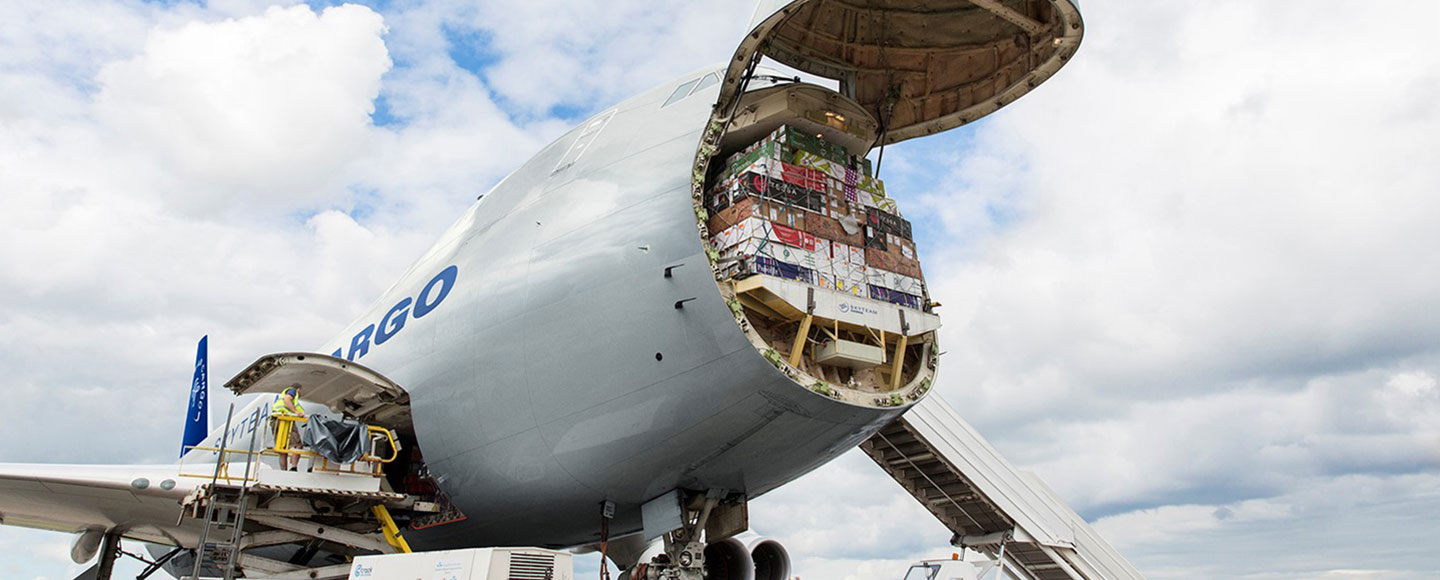
A concrete activity aiming at emission reduction is the modernization of the fleet. Each airline favours new generation aircraft with lower noise level and air emissions. Fleet renewal is the fundamental key for noise reduction and for flying as clean as possible.

For example, Air France-KLM is investing in the most environmentally friendly commercial airplanes ever built. Their recently acquired Boeing 777F, whose consumption and CO2emission is 18% lower than the Boeing 747-400, is the most fuel efficient freighter in the world. The same principle applies to the new Airbus A330 and A320s of Alitalia. This aircraft, featuring the green “Environmentally Friendly” company logo, meets the most advanced international standards. These planes are equipped with the latest technology and the most efficient engines, reducing noise and improving fuel consumption. Korean Air continues to increase its freighter fleet by launching B747-8Fs, B777Fs, the highly-efficient eco-friendly aircraft. Their fleets will also include A380, with 40% higher maximum take-off weight than B747, and B787, the first private aircraft to employ a light carbon complex over the entire fuselage. Delta operates one of the youngest fleets in the world. Their 2009 fleet is, on average, 35% more fuel efficient than its fleet was in 2000. Czech Airlines also cares for the environment and in recent years reconfigured its fleet, replacing old types of aircraft with new ones that are certified under international standards for lower noise categories. China Southern Airlines, the newest member of SkyTeam Cargo, has also been advocating Green Flying by actively innovating eco-friendly, renewing its fleet, optimising flight paths, and cutting greenhouse gas emissions. China Southern has eliminated more than 20 aged and high fuel consumption MD 82 aircraft and introduced highly efficient aircraft such as the Airbus A320, and Boeing 737-800.

All SkyTeam Cargo members have been committed to a variety of ground and flight activities and projects to protect the environment. Among those are the following:

A concrete example of this green approach comes from the CO2 compensation service offered by Air France-KLM Cargo to its customers, allowing both freight forwarders and shippers to gain detailed insight into the CO2 emission of their shipments and the possibility to compensate for this emission. The compensation contribution is invested fully in projects that create wind, water or solar energy with a Gold Standard certificate - guaranteeing premium projects in the carbon market which are audited by external parties.

Moreover all members strive to create personal awareness of these topics among the entire staff by constantly communicating environmental sensitivity and culture. As an example, through various initiatives, such as commuting alternatives and volunteerism programs, Delta encourages its employees to become environmentally conscious both at work as well as in their private life. China Southern has built an oil control management system and encouraged employees to actively communicate through various information platforms about their tips in saving oil including the internal oil control website, SMS platform, and oil control seminars. China Airlines' efforts extend beyond in-flight fuel-savings. In 2012, China Airlines partnered with Taiwan’s Industrial Technology Research Institute to conduct a feasibility study on the use of electric vehicles at airports. The operational data will be used to introduce electric vehicles into airport operations in the future.

Each SkyTeam Cargo member cares about environmental issues and aims to continuously implement and improve environmental management policies and systems. The focus of these policies and systems is to achieve a permanent reduction of both direct and indirect impacts on the planet caused by air transport activities. China Airlines, for example, began introduction of the ISO 14001 Environmental Management System in 2012 to synchronize its environmental protection model with international standards.

To try to make a real difference, all of the airlines have to take on this challenge together, setting an example in the global airline industry. For the future, their commitment is continue to guarantee the clients a transportation service which combines reliability, safety and respect for the environment.